
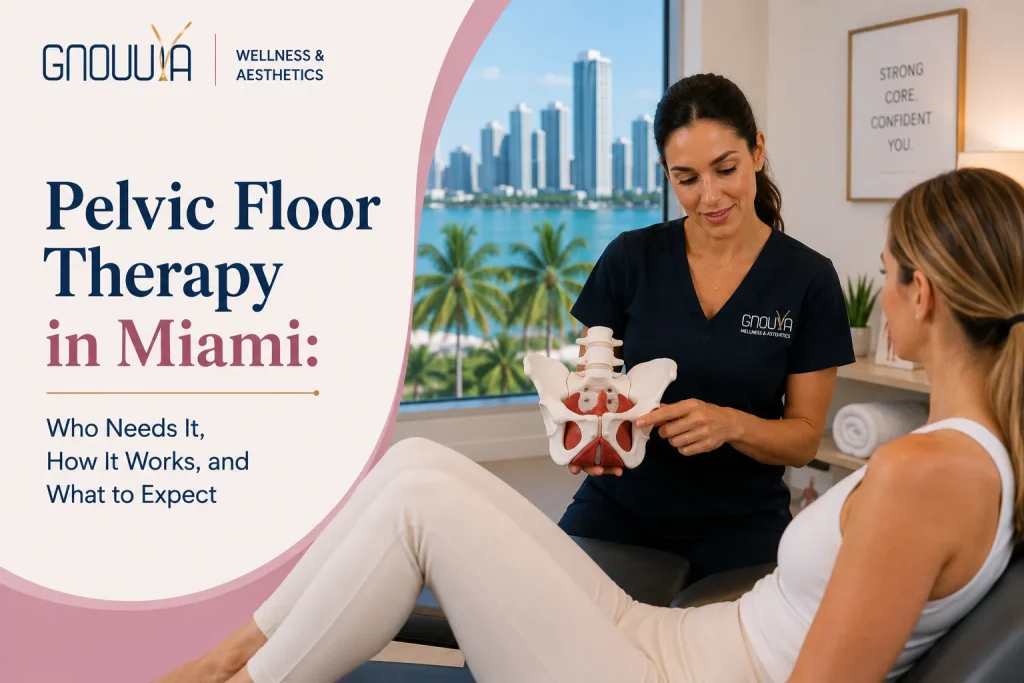
Pelvic floor therapy has moved from niche specialty to standard of care for a growing list of women’s health conditions. What was once thought of as postpartum recovery has expanded to include treatment for incontinence at any age, chronic pelvic pain, painful intercourse, prolapse, and preparation and recovery around gynecologic surgeries. In Miami, the availability and quality of pelvic floor therapy has grown substantially over the past few years to meet the growing recognition of what this specialty can address.
This guide covers what pelvic floor therapy actually is, the wide range of conditions it treats, what to expect from evaluation and treatment, and how to find quality care in Miami. For our companion resource specifically on postpartum pelvic floor recovery, see our pelvic floor recovery after childbirth.
What Is the Pelvic Floor and Why Does It Matter?
The pelvic floor is a group of muscles and connective tissues at the base of the pelvis that provides support for the bladder, uterus, and rectum, controls urinary and bowel function, contributes to sexual function, and provides core stability for the spine.
When these muscles are functioning well, most people never think about them. When they become weak, too tight, or uncoordinated, they can cause a wide range of symptoms that affect quality of life significantly.
The pelvic floor can develop dysfunction in either direction. Hypotonic (too weak or lax) presentations cause incontinence, prolapse, and reduced sensation. Hypertonic (too tight) presentations cause pain, difficulty with penetration, and chronic pelvic discomfort. Both respond to targeted pelvic floor therapy, but the treatment approaches are meaningfully different.
Pelvic floor problems are not something to just live with. Modern pelvic floor therapy produces meaningful improvement for the majority of women with appropriate diagnosis and treatment.
What Conditions Does Pelvic Floor Therapy Treat?
The list of conditions that respond to pelvic floor therapy has grown substantially. Modern indications include:
- Stress urinary incontinence (leaking with cough, sneeze, exercise)
- Urge urinary incontinence and overactive bladder
- Pelvic organ prolapse (mild to moderate cases)
- Painful intercourse (dyspareunia)
- Vaginismus and other genito pelvic pain disorders (see our vaginismus treatment guide for more detail)
- Chronic pelvic pain and pelvic floor spasm
- Postpartum recovery including diastasis recti and pelvic floor rehabilitation
- Pre and post surgical preparation and recovery for gynecologic procedures
- Constipation and other bowel dysfunction
- Interstitial cystitis and painful bladder syndrome
- Menopause related pelvic floor changes
- Endometriosis related pelvic pain
- Return to running and high impact exercise after childbirth or surgery
- Pre and post vaginoplasty support (see our vaginoplasty recovery timeline)
The wide range of applicable conditions is one of the reasons pelvic floor therapy has become such a valuable part of integrated women’s health care.
How Does Pelvic Floor Therapy Actually Work?
The Evaluation
The first session is typically 60 to 90 minutes and includes detailed history, discussion of symptoms and goals, external assessment of posture and pelvic alignment, and often an internal pelvic examination if the patient consents. The internal exam allows the therapist to feel specific muscle tension patterns, identify trigger points, and assess coordination. This is different from a gynecologic exam and is done with sensitivity to the patient’s comfort level.
Manual Therapy
Hands on release of tight muscles, trigger point work, and mobilization of pelvic structures. Can be external only or include internal work depending on findings and patient consent. Skilled manual therapy is often the most rapidly effective element of treatment for muscle tension patterns.
Targeted Exercise
Individualized exercises based on findings. For hypotonic (weak) presentations this often includes progressive strengthening including but not limited to Kegel exercises. For hypertonic (tight) presentations this often includes stretching, relaxation, and coordination work rather than strengthening. The right exercises depend entirely on your specific pattern.
Biofeedback
Uses sensors to provide visual or auditory feedback about muscle activity. Helps patients learn to identify and control muscles they cannot easily feel. Particularly useful for hypertonic patterns and coordination issues.
Breathing and Core Coordination
Diaphragmatic breathing patterns work with the pelvic floor as an integrated system. Teaching proper breathing and coordinating it with core muscle patterns is often central to lasting improvement.
Behavioral Modification
Bladder training, bowel timing, postural changes, and modification of habits that contribute to symptoms. Small daily changes often produce meaningful cumulative benefit.
Home Exercise Program
Between session home practice is essential. Most patients receive specific exercises and self care techniques to practice daily. Consistency with home program is often the biggest predictor of good outcomes.
What Does a Typical Treatment Course Look Like?
The specifics vary by condition and individual response, but a typical pelvic floor therapy course involves:
- Weeks 1 to 2: Initial evaluation and beginning of treatment plan
- Weeks 3 to 8: Weekly to biweekly sessions with progressive treatment
- Weeks 8 to 12: Treatment intensity often decreases as gains consolidate
- Weeks 12 to 16: Final sessions focus on independence, home program mastery, and prevention
- Total: typically 8 to 16 sessions over 3 to 4 months for most conditions
- Chronic complex conditions may benefit from longer treatment courses
- Follow up periodic sessions available for maintenance if needed
Meaningful improvement is typically visible within the first 3 to 4 sessions. Full resolution often takes the complete treatment course. Trying and stopping treatment before completing the plan is a common cause of perceived failure.
Consistent completion of the treatment plan is one of the biggest predictors of success. Skipping sessions or stopping early significantly reduces the benefit achievable from pelvic floor therapy.
How Is Pelvic Floor Therapy Different for Different Life Stages?
Postpartum Recovery
Focus on rebuilding pelvic floor strength and coordination after delivery, addressing diastasis recti, managing any incontinence, and progressive return to exercise. Modern approach starts earlier than the traditional 6 week wait for many patients. Our pelvic floor recovery after childbirth resource covers postpartum specifics.
Reproductive Age (Non Postpartum)
Common indications include vaginismus, painful intercourse, chronic pelvic pain from endometriosis or other causes, and management of stress urinary incontinence. Often coordinated with gynecologic care. See our painful sex causes and treatments for the related sexual pain angle.
Perimenopause and Menopause
Focus on managing changes from declining estrogen including recurrent UTIs, increased incontinence, prolapse, and vaginal atrophy contributions. Often coordinated with vaginal estrogen and other hormonal management. Our vaginal atrophy and GSM treatment covers this hormonal crossover.
Post-Menopause
Continued management of the age related changes, prevention of prolapse worsening, and maintaining function. Combined with appropriate hormonal treatment when relevant.
Around Gynecologic Surgery
Pre surgical preparation to optimize starting condition, post surgical recovery to prevent complications and support optimal healing. Increasingly recommended as standard of care for vaginoplasty, perineoplasty, and prolapse repair.
How Do You Find a Quality Pelvic Floor Therapist in Miami?
Not all physical therapists are trained in pelvic floor therapy. Key criteria to look for:
- Doctor of Physical Therapy (DPT) with specific pelvic floor certification
- Certifications like WCS (Women’s Health Certified Specialist) or CAPP (Certificate of Achievement in Pelvic Physical Therapy) indicate advanced training
- Comfort performing internal pelvic assessment when clinically indicated
- Experience with your specific condition
- Willingness to coordinate with your gynecologist or other providers
- Adequate session time (typically 45 to 60 minutes)
- Comfortable and private treatment space
- Clear treatment plan and expected timeline discussed upfront
- Bilingual services if English is not your first language
For patients whose gynecologist has recommended pelvic floor therapy as part of a comprehensive treatment plan, coordinated care between providers produces better outcomes than fragmented care. Our gynecology practice page covers our approach to integrated women’s wellness.
What Should You Expect to Pay?
Pelvic floor therapy pricing in Miami in 2026:
- Initial evaluation (60 to 90 minutes): 150 to 300 dollars
- Follow up sessions (45 to 60 minutes): 100 to 200 dollars
- Package pricing: often 10 to 20 percent savings for 8 to 16 session packages
- Insurance coverage: varies significantly by plan; some pelvic floor therapy is covered under physical therapy benefits
- Cash pay clinics: common and often produce best clinical experience
- Some gynecology practices offer in house pelvic floor therapy as part of integrated care
While cost is a real consideration, the effectiveness of appropriate pelvic floor therapy makes it one of the highest value investments in women’s health for many conditions.
What Should You Do Next?
If you have symptoms that might respond to pelvic floor therapy, practical next steps:
- Discuss with your gynecologist whether pelvic floor therapy is appropriate for your specific case
- Ask for specific referrals to pelvic floor therapists your provider has worked with
- Book a comprehensive evaluation rather than starting with just a few sessions
- Commit to the full recommended treatment course
- Prioritize consistency with the home exercise program
- Expect meaningful improvement within 3 to 4 sessions and significant change by session 8 to 12
- For complex or chronic conditions, be patient with the timeline
- For our integrated approach to gynecologic care including coordination with pelvic floor therapy, see our practice page
Frequently Asked Questions
What is pelvic floor therapy?
Pelvic floor therapy is specialized physical therapy focused on the muscles and connective tissues at the base of the pelvis. It treats conditions including incontinence, prolapse, painful intercourse, chronic pelvic pain, postpartum recovery, and pre or post surgical rehabilitation.
Does pelvic floor therapy actually work?
Yes for the majority of appropriately selected patients. Multiple studies show meaningful improvement in incontinence, pelvic pain, painful intercourse, and prolapse with appropriate pelvic floor therapy. Consistent completion of the full treatment course is important for optimal outcomes.
How many sessions of pelvic floor therapy do I need?
Typical treatment courses involve 8 to 16 sessions over 3 to 4 months for most conditions. Meaningful improvement is often visible within the first 3 to 4 sessions. Chronic complex conditions may benefit from longer courses. Each treatment plan is individualized.
Is pelvic floor therapy embarrassing?
Skilled pelvic floor therapists work sensitively and respectfully. Internal exams are done only with patient consent and can be modified based on comfort level. Most patients report feeling comfortable after the first session. The therapy addresses issues that are often more embarrassing to live with than to treat.
Is pelvic floor therapy covered by insurance?
Coverage varies significantly by plan. Some insurance plans cover pelvic floor therapy under physical therapy benefits. Cash pay clinics are common and sometimes produce a better clinical experience. Discuss coverage with both your insurance and the therapist office before starting.
Can I do pelvic floor exercises on my own instead?
Some women benefit from self guided Kegel exercises for mild issues. However, many women perform Kegels incorrectly, and for hypertonic (too tight) presentations Kegels actually worsen symptoms. A proper evaluation identifies what your specific muscles need, which is often not just more strengthening.
Wondering if pelvic floor therapy could help you? Book a comprehensive gynecology consultation with Dr. Verdeza at G-Nouva in Doral, Miami to discuss whether pelvic floor therapy is part of the right treatment plan for you. Call (786) 453-2785 or visit gnouva.com/contact.
About the Author
Dr. Carlos M. Verdeza is a board certified gynecologist and the founder of G-Nouva, an integrative women’s wellness and cosmetic gynecology center in Doral, Miami. He has fifteen plus years of experience in women’s hormone care, menopause management, cosmetic gynecology, and metabolic optimization. Full bio at gnouva.com/our-authors/dr-carlos-m-verdeza.